
 |  |  |  |
|---|---|---|---|
 |  |  |  |
 |  |  |  |
 |  |  |  |
 |  |  |  |
 |  |  |  |
 |  |  |

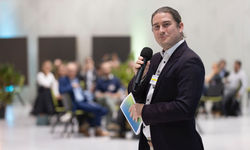
WBCSD Head of Climate BaseCamp2025


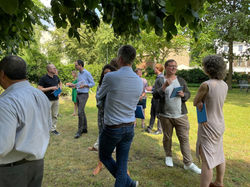
BMBF FONA Forum 2024
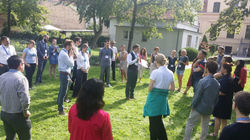
WBCSD HoC BaseCamp APAC 2026
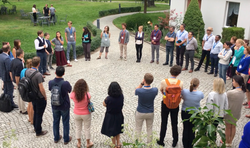
My talent lies in bringing people with very different perspectives into exchange and relationship with each other in such a way that they learn from one another and become capable of taking action together . Groups of people who don't know each other beforehand or even have prejudices against each other discover under my guidance how exciting and enriching it can be to work together creatively and constructively on very concrete problems.
I have a particular fondness for groups of people who don't feel particularly comfortable in group processes, for example strong leaders or highly profiled experts or introverted loners .
Many collaborative formats rely heavily on a sense of "we" or "communication games," which are often inappropriate for certain participants or personal constellations (e.g., different hierarchical levels or generations). As a result, workshops frequently elicit eye-rolling or mental withdrawal from some (often particularly important!) participants (or they simply don't show up at all).
Perhaps because I myself, as a physicist, was somewhat socialized as a loner, I generally feel similarly as a participant in such formats. That's precisely why I design formats to seamlessly integrate introverted geniuses or strong individualists, leaders or pioneers, without imposing a mode on them that doesn't suit them.
My approach is also creative and interactive. However, I always keep the specific context, occasion, and participants in mind.

The feedback I've received over the years confirms this time and again: those who were previously very skeptical about moderation or group processes in general are then particularly enthusiastic.
A few years ago, an emeritus professor said quite explicitly after the first day: "It's fantastic! I'm really looking forward to tomorrow. But let me tell you one thing: If I had known beforehand what this would be like, I probably would never have come. How lucky I am to be here!"
Or as a COO of a large company once whispered to me at dinner: "Well, I have no idea what you're doing here or how you're doing it, but it works fantastically!"
There are few things that bring me as much joy as a group that, to their own surprise, gets into a truly productive flow together.
"Lively workshop facilitation doesn't have to be silly"
"Co-creativity is also possible with a group of individualists"
(and even with the so-called "big egos")
I don't really remember exactly how I grew into the role of facilitator. I think I was simply frustrated that so many great people would come together and then – despite good intentions – so little would come of it. Or perhaps, while workshops were a good experience in themselves, they ultimately felt like an isolated sphere and weren't really connected to my regular work routine.
I found far too many meetings, conferences or workshops to be neither lively nor productive, whether on a large international stage or with only ten people.
I was certain that there had to be a more meaningful, productive, and enjoyable way to do this. Almost 15 years have passed since then, and the design and management of communication processes for groups of all kinds has become the focus of my work, both in practice and in research.
The spectrum of participants ranges from managers of competing international companies to interdisciplinary research groups, spiritual activists, or ministry departments.
The following short films provide an insight into what something like this can look like: